Showing posts with label child immunization. Show all posts

Wednesday, 19 June 2013

Examine the Rise and Fall of Immunization Cost in Developing Countries and its Usefulness


For the developing countries, vaccines have made feasible some of the greatest public health successes in the last decade. The supply of high-impact Immunization helps avert an estimated 2.5 million child deaths each year. Vaccinesmanufacturing laboratories are striving to spread awareness about the up and coming technologies & processes executed in the field of vaccine development. The process of vaccine development involves high investment costs and the facilities require the optimum use of resources. Apart from the cost, there is no dearth of speculations involved when it comes to acquiring high quality and effective vaccinations for the general public. It also requires adequate research and development, quality control and quality assurance in the field of vaccination. However, the investment cost has been an important aspect to maintain world-class infrastructure for vaccine. As resources and facilities for vaccines manufacturing are available in abundance, on the other hand laboratories have to face a number of problems to initiate a research and development in developing countries. In addition, the world’s vaccine market is very small—below 2 percent of the pharmaceutical market—attracting few suppliers.

It has been examined that the prices of traditional vaccines have decreased significantly. The immunization cost of traditional six vaccines of the Expanded Programme on Immunization (EPI), measles, diphtheria, pertussis, tetanus, oral polio and BCG has shown a radical decrease in cost. Because the fixed costs of development of these vaccines have been covered long ago, and because their production costs have been lowered due to the learning curve and economies of scale, their prices are relatively low.  In the past years, there has been excess production capacity of these vaccines as new producers have entered the market, thus sales at low prices covered the variable costs of producing extra doses of vaccine, and did not require additional capacity.

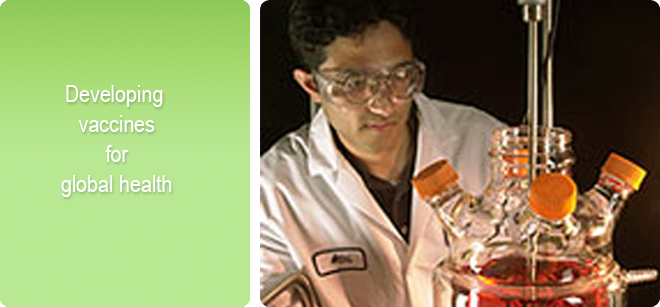
Hilleman Laboratories is intended to participate actively to develop and optimize vaccines for developing countries to ensure healthy tomorrow while keeping its investment costs in control. The lab understands the constant need of vaccines by developing countries and for this reason puts more emphasis on the supply of high impact immunization for kids and even promotes awareness campaigns in rural areas about how to keep track on immunizationschedule for kids. The lab develops high-impact, thermal stable and cost-effective pneumococcal vaccine and conjugate vaccine for developing countries. Hilleman Laboratories was set up in 2009, the first time a research charity joined hands with a drug maker to develop affordable vaccines to prevent diseases that commonly affect people in low-income countries. The firm has successfully promoted and supplied a heat stable, affordable and easy-to-use rotavirus vaccines used to prevent diarrhoea in children.


Corporate Office and R&D Laboratory
MSD Wellcome Trust Hilleman Laboratories Pvt. Ltd.
2nd Floor, Nanotechnology Building, Jamia Hamdard
Hamdard Nagar, New Delhi – 110062 (India)
Ph: +91 11 30997700 Fax: +91 11 30997711
Website: www.hillemanlabs.org

Wednesday, 17 April 2013

Development of Vaccines in India – Supporting the Growth


Development of vaccines has been a matter of concern for the number of laboratories in India, every year research labs in India are investing in the process of vaccine development and child immunization in order to ensure maximized health scale. As we are witnessing the era of health revolution, routine child immunization has played a significant role in preventing childhood deaths and disability; thousands of children in India continue to die from vaccine preventable diseases each year. According to a recent report, Hilleman Laboratories will be investing 90 million pounds (nearly Rs 650 crore) in seven years to develop vaccines, including one to treat diarrhea, for which it will conduct research in India.

There are a number of health institutions that are readily preparing immunization chart for children from 1 month to 6 years of age group, this will provided to parents so that not even a single child immunization goes skipped and parents can keep a track deliberately. As per most of the medical institutions over the world, rotavirus diarrhea leads to annual deaths of five to seven lakh children all over the globe, out of which one lakh are in India alone. Therefore, it’s good to be aware about the situations happening in the world rather than becoming a victim of such fatal disease. Other is the name of the disease hepatitis a and hepatitis b, hepatitis Avaccine cost is quite expensive in Indian market, but still you will get it at lesser prices from some of the charitable hospitals and medical institutes. Hepatitis B vaccines are being inclusive in the national vaccination schedule.

An overview has been made about the disease in the conference - Hepatitis B is a disease of the liver caused by Hepatitis B virus (HBV) infection. HBV is transmitted through contact with infected blood or body fluids, unprotected sexual intercourse and the perinatal route but not through casual contact. About two billion people worldwide have been infected with the virus, an estimated 360 million live with chronic infection, and at least 600,000 people die annually from acute or chronic consequences of Hepatitis B, such that Hepatitis B is a major public health problem worldwide.

India has restored its image internationally when it comes to the successful development of vaccines and immunization policy. Vaccine policy of India is not rigid and streamlined the practice vaccines in India, recently in December, 2012 World Health Organization (WHO) has approved the vaccine policy adopted by India. With this approval India became the first country in 2012 to pass the stringent levels of seven indicators that is put forward by the WHO that is made much more stringent every time conducted by a team of 12 international experts headed by a member of WHO.

Saturday, 6 April 2013

Prepare Immunization Chart for Children to Bestow Good Health to your Newborn Baby


Good health is the best gift you can give to your new born baby, as we all are aware of the fact that newborn babies are prone to get affected easily by viruses or diseases because of their low immunity level in comparison to adults. Therefore newborn babies need to be cared the most which is feasible when parents are well informed and literate about all the major or minor aspects of child immunization and prepare an easy to remember immunization chart for children after consulting an experienced doctor. Your family doctor could also suggest you the best laboratories in your town from where you can get all the vaccines for your children.

If you are expecting a baby then I recommend you to research as much as you can as it will surely provide information about the recent development in immunization and vaccine schedule for children. Hence your child can enjoy an immunized life. Here are some research based vaccine recommendations that would certainly help you to prepare an immunization chart for children. However the wise way is always to consult your family doctor to take help and make sure you would not skip even a single vaccination of your baby.

At the time of birth, vaccinations that are suggested are Hepatitis B: Hepatitis B vaccine (HBV); recommended to give the first dose at birth within 12 hours, but may be given at any age for those not previously immunized.

The child of age group 1 to 2 months, the recommended vaccine is Hepatitis B: Second dose should be administered 1 to 2 months after the first dose.

The children of 2 months, the suggested vaccines are for DTaP: Diphtheria, tetanus, and acellular pertussis vaccine. Hib: Haemophilus influenzae type b vaccine, IPV: Inactivated poliovirus vaccine, PCV: Pneumococcal conjugate vaccine, Rota: Rotavirus vaccine.

During the age of 4 months, the recommended vaccines are DTaP, Hib, IPV, PCV, and Rota. Once your baby reaches the age of 6 months, the recommended vaccines are DTaP, Hib, PCV and Rota.

With the arrival of new advancements in the health sector, world’s best laboratories are contributing their best possible efforts and funds towards initiating global immunization programs and campaigns in rural areas of developing countries. As the world is witnessing the change in terms of economic and social development, health sector has also shown an outgrowth therefore the development of vaccines has increased rampantly to meet the growing needs of the inhabitants from all across the globe.

According to CNN Health, the most notable change to the vaccination schedule in the 2013 version is that what had been two schedules — for ages 0 to 6 and 7 to 18 — has been consolidated into "one comprehensive list, covering children from birth through age 18". There are some suggestive measures that can be taken up and would definitely help you to be well-informed about the proficient laboratories that are well-known and gained substantial prominence in vaccine optimization for children.